Guide
Tattoo stencil paper, without the catalog voice
Stencil paper is not one product. It is the sheet that matches your machine and the way you move lines onto skin. This guide names the categories. It does not invent prices, thicknesses, or a house brand.

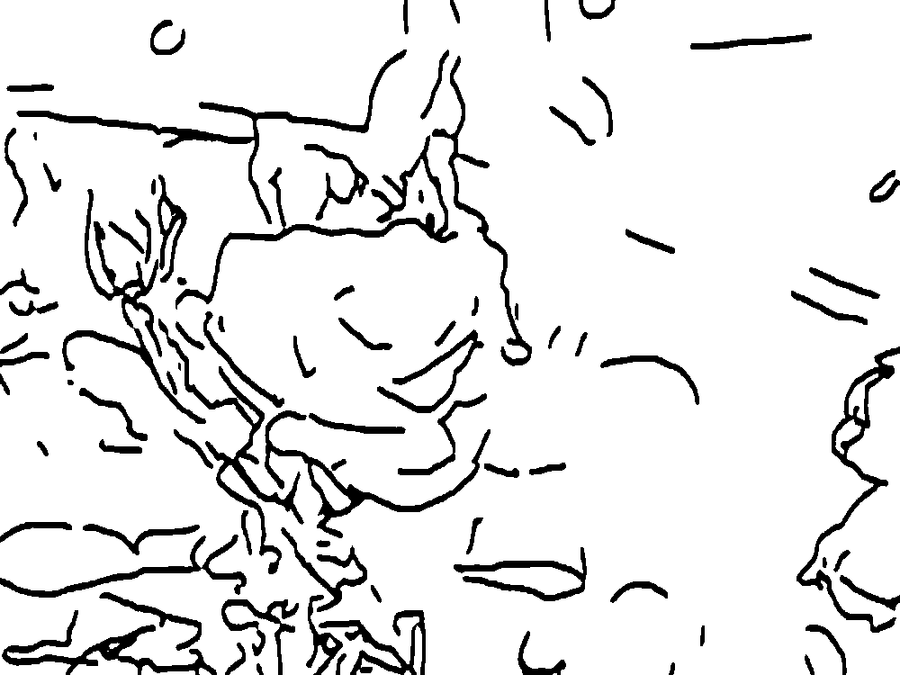
Whatever paper you load, it will transfer the lines you actually printed. This public-domain rose (Kelvinsong, CC0) traced the garden too. Crop before you spend a sheet.
The file and the sheet are different jobs
Photo Tattoo Stencil makes the drawing: black lines, a width in inches or centimetres, mirror if you need it, in the browser, without uploading the photo. The paper is how those lines leave the printer and reach the skin. Swapping paper will not fix a bad trace, and a perfect trace will not survive the wrong sheet in a thermal head. Read this next to the printer guide, which is just as unwilling to invent specifications.
Thermal media
Thermal stencil rolls and sheets are what a thermal tattoo printer is built to mark. The machine heats a transfer layer. You apply that layer with the process that paper expects. Buy the media the unit's maker or your current supplier already stands behind. If a cheaper roll is offered, ask whether it is actually for that machine. We will not quote a width, a length, or a price. Those are on the box you can read, and they change.
Store thermal rolls dry and flat enough that they still feed. A crushed roll is a jam, not a design problem. When you are out, you are out. Copy paper is not a secret thermal sheet. The no-paper guide is what to do instead of experimenting.
Spirit and hectograph sheets
Spirit stencil paper, sometimes called hectograph paper, is the older hand-transfer sheet many artists still mean when they say transfer paper. You print or draw on it and transfer with the solution made for that system. It is not the same object as a thermal roll, even though both end with purple or blue lines on skin. If your shop uses spirit paper, an inkjet or a laser may or may not be allowed to print it. The package is the authority. Heat from a laser is a known way to ruin films that were never meant for it. Ask before you run a stack through the office printer.
Inkjet stencil sheets
Some sheets are sold for inkjet printers and then transferred. They are a category, not a recommendation of a brand. Follow the sheet. A normal photo inkjet can also print our PDF onto plain paper so you can measure it. That print is a proof. It is not automatically a stencil. Ink formulated for photographs does not become transfer ink because the drawing is black.
Carbon and graphite
Carbon paper and a graphite rubbing on the back of a print are pinch methods. They smudge. They widen the line. They are discussed as limits in the no-paper guide, not as a product we prefer. Do not substitute a random office carbon if you do not know whether it is meant for skin. This site will not publish a homemade coating.
A four-inch flower, on purpose
Say the client wants a flower four inches wide. You crop the photo so the bloom is the subject, not the garden. You run Outline in the browser. You type 4 inches. You print at 100 percent. The ruler on the sheet should read about 4 inches across the design, not across the whole page. If it reads 3.5, the driver scaled it. The paper did not shrink the art by magic, and Photo Tattoo Stencil did not either, unless you turned on the option that shrinks copies onto one sheet and the note told you the new width.
That same sheet will also print every leaf you left in the crop. Paper is faithful. It is not an editor. Spend the minute cropping on the phone before you spend a thermal sheet being annoyed. Mirror if this flower has a banner with a name. Read the name. Then transfer with the solution that sheet expects, not with whatever bottle is closest.
If you are comparing papers because a line dropped out, change one thing at a time. Same file, same printer, same width, new sheet. If the line is still gone, the file was too thin. The fine line page is about that file. If the line is there on plain paper and missing on the transfer, then you are allowed to suspect the sheet or the unit. Write down which one you changed so the next artist in the shop does not have to rediscover it.
How the PDF should meet the sheet
- Black lines on white. Leave invert off in the tool.
- Actual size in the print dialog. Then a ruler.
- Mirror once, in one place, if the transfer flips.
- Crop the design before you print, so you are not transferring background lines you already disliked on screen.
- Keep a second copy when the first transfer might smear. The maker can put two or four on the sheet at the width you set, if they fit.
Paper will not rescue lettering that was already warped in the trace. Redraw words. Paper will not turn a soft photo into a fine line. The fine line tips are about the test scrap you print on a real sheet, not about buying a thinner brand by rumor.
Checked against our own tool in November 2026: we export the file, we do not sell the paper, and we do not take a cut if you buy some. The maker is on the generator page.
Questions
Which stencil paper should I buy?
The paper your printer and your transfer method already use. Photo Tattoo Stencil does not sell paper and does not publish a ranked list or prices. If you are changing machines, ask the paper maker what that machine accepts.
Is hectograph the same as a thermal roll?
No. People say transfer paper for both. A thermal unit wants its thermal media. Spirit or hectograph sheets are a different process. A PDF does not convert one into the other.
Can I use ordinary printer paper on skin?
Ordinary paper is for checking size with a ruler. It is not a skin transfer. Do not assume it belongs in a thermal unit.